Date: May 2, 2026 | Reading time: 3 minutes | Author: Femke Hoekstra
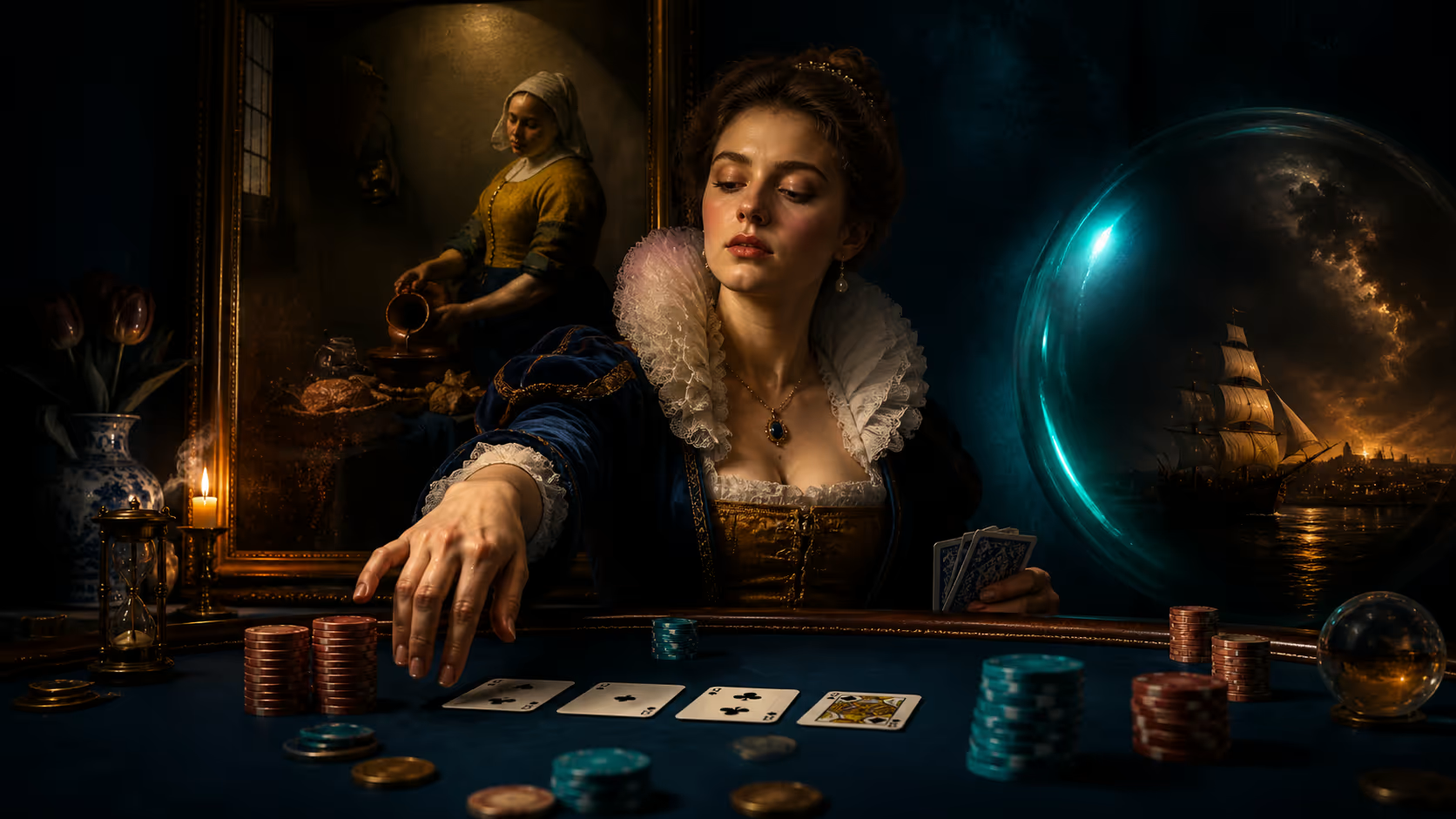
Picture yourself at the blackjack table seeing Van Gogh’s fierce brushwork in your head. A fine image — and completely powerless against the mathematics of the game. One thing comes first, because it saves more money than everything below: in blackjack only basic strategy measurably lowers the house edge, and nothing on this page replaces it.
What this article is about is the part the strategy chart does not cover: attention, pace, and the moment you decide to stop. Those are not tricks against the casino but habits against yourself — and the painters here are nothing more than a convenient mnemonic. What follows comes from what is known about attention and self-control, not from a casino and not from conversations we never had.
The honest version of the art metaphor is this: a painting makes you look for longer than you intended. At a gaming table the same slowness works in your favour, because almost every expensive decision there is taken in a hurry — the extra stake after a loss, the double «on instinct», the round you had already decided not to play.
- Van Gogh — noticing intensity: register when your own tension rises. A hand played with your heart going faster is exactly the hand you cannot explain afterwards.
- Rembrandt — light and shadow: look at what you cannot see. The dealer has no hidden intentions to read: their decisions are fixed by the house rules, and those rules are in the game’s information panel.
- Mondrian — structure: fix your stake size and session limit before you start, in round numbers you will not have to calculate in the moment.
- Vermeer — patience: double and split by the chart, not by the feeling that now is the time. Patience here means refusing a decision, not waiting for a signal.
- Golden Age — resilience: recovery means pausing, not fighting back. A loss is not a debt the table is holding for you.
| Habit | What it does | What it does not do |
|---|---|---|
| Following basic strategy | Lowers the house edge to roughly half a per cent | Does not make a session’s outcome predictable |
| Fixing stake and limit in advance | Decides what a bad run can cost at most | Does not change the odds on the next hand |
| Pausing after a loss | Takes the hurry out of the next decision | Does not make a win more likely |
Question: do these art-inspired habits actually work?
Answer: on the house edge they have no effect at all — nobody can measure one, and anyone promising it is selling something. What they do is make the decision calmer, and deciding calmly is precisely the difference in blackjack between following the chart and departing from it.
Question: can I «read» the dealer?
Answer: no. In blackjack the dealer acts on fixed house rules; there is no decision of theirs that changes your odds and therefore nothing to read. At a live table the same holds: the rules are set before the cards fall.
Question: how quickly will I notice a difference?
Answer: in the account balance, only across many sessions, because variance is larger than the effect of any habit. What you notice immediately is how many decisions you no longer take in a hurry.
The same sober look at another table game produces something surprising: the history of the wheel explains exactly why one roulette table costs you 2.70 per cent and another 5.26. Read The history of roulette: from Pascal to the single zero.
How the game information panel works and what it really tells you about a slot is covered in Slots Without Secrets: What the Game Actually Tells You.
And the emotional side of losing and recovering is the subject of The Emotional Garden of Gambling.
On responsible play and the rules: UK Gambling Commission.
About the Author